
New Release: KALLO now supports continuous monitoring and active testing for P25 digital radio networks. Read the Announcement →

    Ranlytics Logo

    Latest at Ranlytics

    6/21/2026•Ranlytics
    Company News

    Ranlytics is Now a Licensed User of the Australian Made Logo

    We design, develop, and build our technology in Sydney, Australia. We always have. But today, that is officially recognised.Ranlytics is now a licensed user of the Australian Made logo - the iconic green and gold kangaroo that certifies our products as genuinely Australian Made.A team spread across Australia, with everything built in one placeOur team spans Queensland, New South Wales, Victoria, and South Australia. Engineers, developers, and commercial specialists - all working on the same mission of giving network operators the tools they need to test, monitor, and understand their wireless infrastructure.But at the centre of it all, our Artarmon facility on Sydney's North Shore is where the hardware actually gets built. Every CERNO backpack, every KALLO monitor - assembled, tested, and shipped from there.That is not the most straightforward way to build a hardware company. Outsourcing manufacturing is cheaper and faster in the short term. But it is not the right approach for the kind of technology we build, or the customers we build it for.Why it matters for our customersWhen you are building technology that critical infrastructure operators, government agencies, and carrier networks depend on - the kind of technology where failure is not an option - you want to know exactly who built it, where, and how.We can answer all three of those questions.The Australian Made certification is a formal recognition of that accountability. To carry the logo, products must meet the criteria set out in the Australian Consumer Law and be certified by the not-for-profit Australian Made Campaign Ltd. It is a third-party accreditation, not a self-declaration. You cannot just buy it.For our customers, that matters. Whether you are deploying CERNO for walk testing across a major carrier network, installing KALLO monitors across a university campus, or relying on LURA for zero-touch drive testing - you are deploying hardware that was built here, by people who stand behind it.Australian engineering, deployed worldwideWe now sell into more than 20 countries. Our hardware is deployed on university campuses, in government facilities, across carrier networks, and inside critical infrastructure around the world.The fact that all of it is designed and manufactured in Australia - and that we can now put a certified mark on the box to prove it - is something our entire team is genuinely proud of.For our Australian customers, it is a signal that you are backing local innovation. For our international customers, it is proof that Australian engineering is world-class.You will start to see the green and gold kangaroo appearing on our products, our packaging, and our website. It is not a badge we take lightly.Proud to carry the kangaroo.
    Read More
    Duty of Care at Scale: How a Tier 1 University Secured Its Critical Communications
    5/13/2026•Ranlytics
    Case Studies

    Duty of Care at Scale: How a Tier 1 University Secured Its Critical Communications

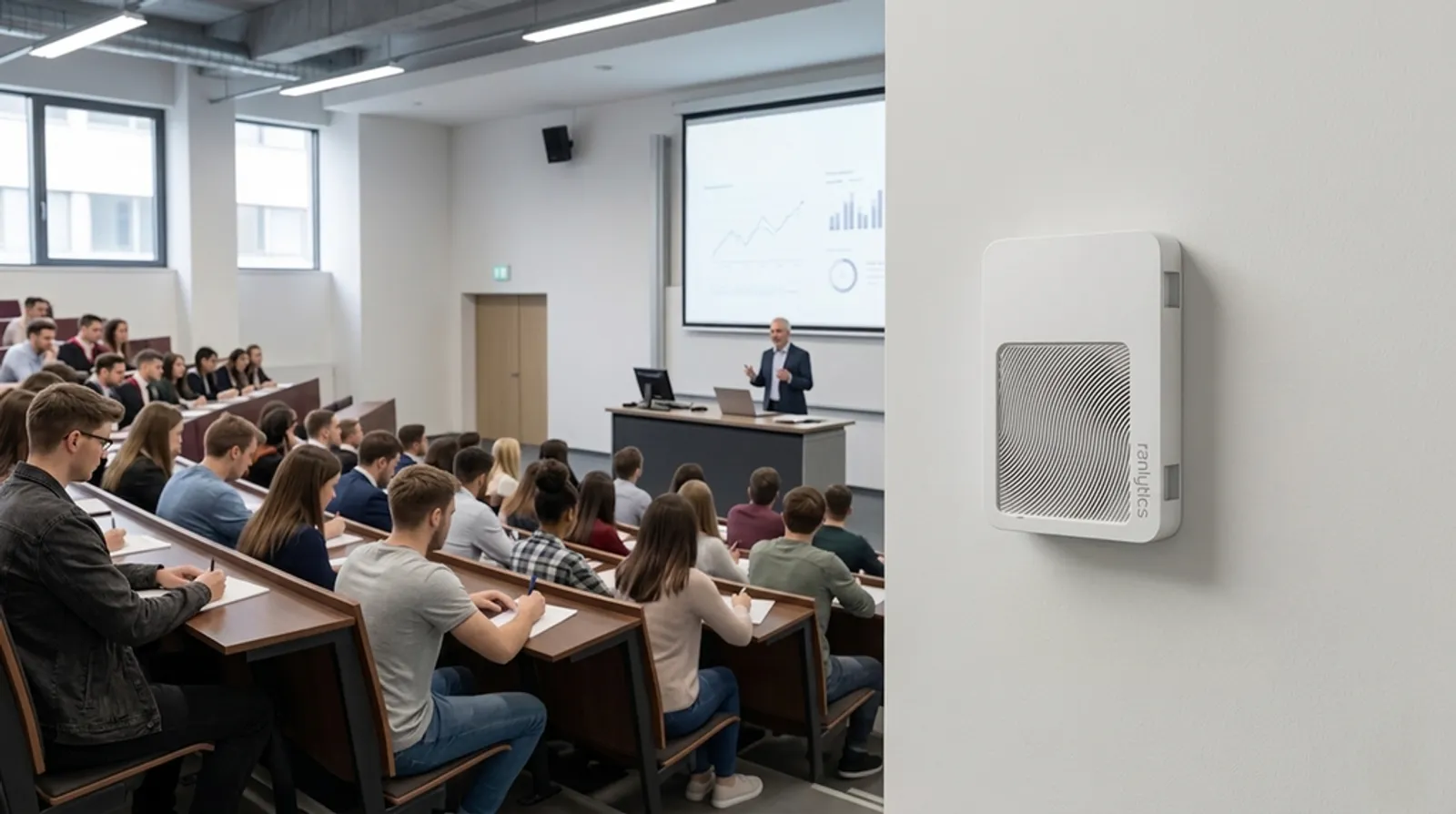
    Duty of Care at Scale: How a Tier 1 University Secured Its Critical CommunicationsWhen we think about cellular coverage on a university campus, the mind usually jumps to students streaming lectures or staff checking emails. But for a modern, multi-campus institution, connectivity is far more than a convenience. It is the communications fabric that underpins an extensive, safety-critical infrastructure.We recently partnered with a leading Tier 1 North American research university to solve a massive engineering and operational challenge: ensuring continuous, verifiable coverage across more than 700 buildings.This is the story of how they moved from assumptions to engineering-grade visibility, fundamentally changing how they manage their duty of care.The Challenge: When Connectivity is a Safety IssueThe university operates a multi-tenanted Distributed Antenna System (DAS) serving tens of thousands of people across multiple campuses. This network supports a vast array of IoT infrastructure, including emergency call boxes, CCTV cameras, building control systems, and monitoring systems for energy, water, and waste.Equally critical is the P25 public safety radio network. Campus police and emergency services rely on this network for mission-critical voice communications. Coverage inside lecture halls, deep basements, sprawling stadiums, and complex research facilities must be assured at all times.In this environment, a gap in P25 or cellular coverage during an emergency is not an IT inconvenience. It is a safety failure.Yet, despite the critical nature of these networks, the university faced a common industry problem: they were flying blind. Without continuous visibility into both cellular and P25 availability and service quality, they had no way to verify that these safety-critical systems were reliably connected. They could not identify degradation before it affected operations, and they lacked the objective evidence needed to hold DAS service providers accountable when issues arose.The Solution: Continuous Visibility with KALLOTo address this, the university is deploying KALLO monitors into every building on every campus. Where coverage complexity demands it—such as in stadiums or underground utility corridors—multiple units are deployed per building.Each KALLO device continuously monitors the availability and quality of service delivered by all three US cellular carriers on the DAS, plus the P25 public safety radio network, around the clock.This is not a point-in-time walk test. It is continuous, real-time intelligence.Automated alerting notifies the university’s communications team the moment any metric degrades below a set threshold, whether for a commercial carrier or the P25 network. This enables proactive intervention before students, staff, or first responders are ever affected.Real-World Impact: Detecting the UnseenThe value of this continuous monitoring was proven almost immediately. During the deployment phase, KALLO identified a downed campus antenna. The cause? A fire at the site.Crucially, KALLO detected this failure through network data before it was reported through any other channel. This is the difference between proactive management and reactive firefighting.As the university's Communications Systems Specialist noted:"KALLO gives us something we’ve never had before: 24/7 objective proof that every carrier and P25 network is performing across every building on every campus. For a university of our scale, with the safety-critical IoT infrastructure we operate, that visibility isn’t optional—it’s essential."What’s Next: Infrastructure, Not Just EvaluationThe university is now expanding the KALLO deployment to achieve complete coverage across every building and outdoor area on every campus.For an institution with a legal and ethical duty of care to tens of thousands of people, continuous, verifiable coverage assurance is no longer a capability they are merely evaluating. It has become foundational infrastructure.By replacing assumptions with engineering-grade data, they are ensuring that when their networks are needed most, they will perform.Get in touch to learn more about how KALLO is transforming network intelligence for critical infrastructure.

    Read More
    Eradicating the Indoor Blind Spot: KALLO Now Supports Continuous P25 Network Monitoring
    5/6/2026•Ranlytics
    Product Updates

    Eradicating the Indoor Blind Spot: KALLO Now Supports Continuous P25 Network Monitoring

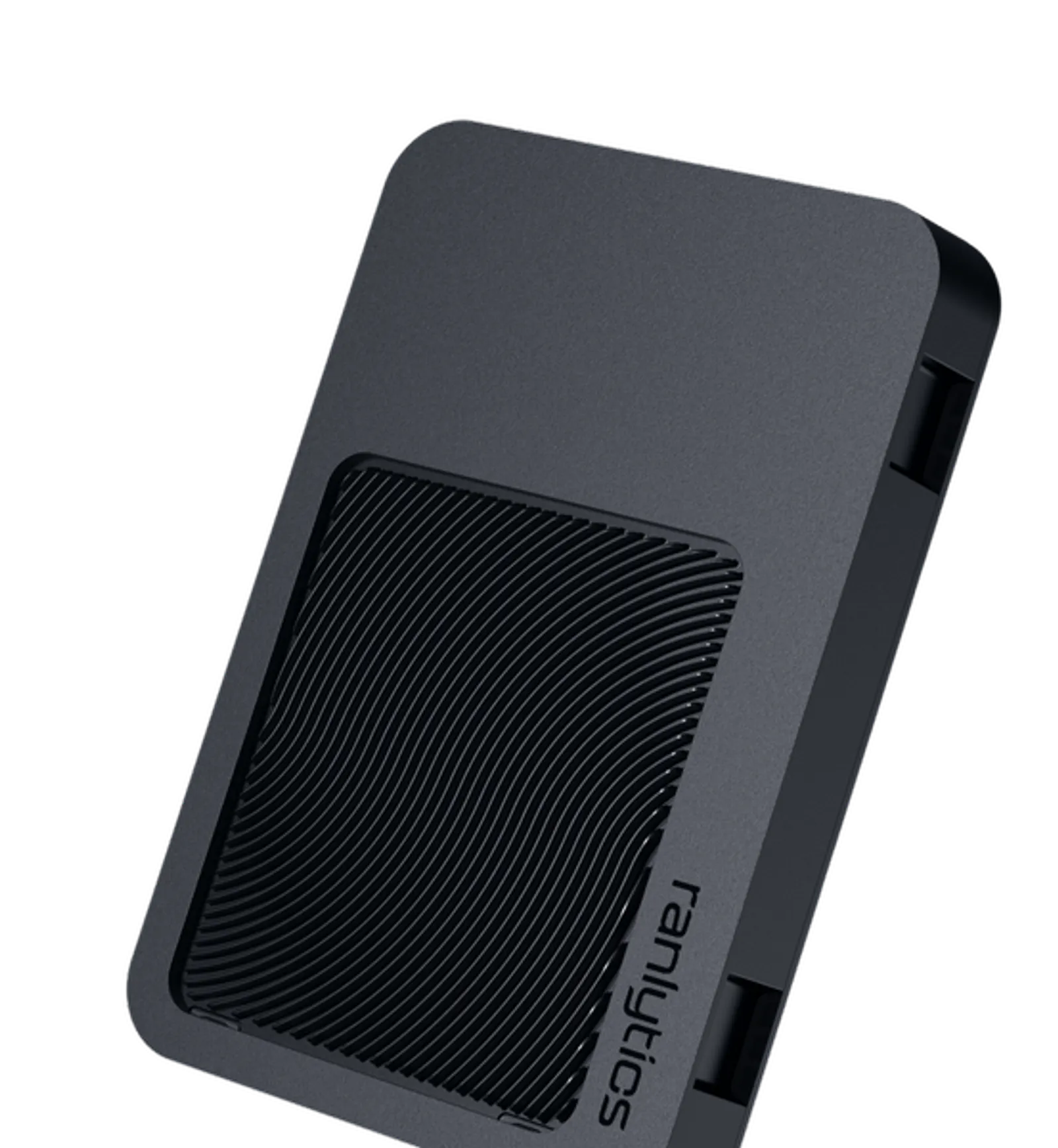
    For emergency services and critical infrastructure operators, a dropped call is not an inconvenience. It is a crisis.From dispatch to the processing of a scene, first responders rely on P25 digital radio networks to communicate across agencies. In sectors like mining and energy, these networks are the backbone of operational safety. Yet, the way we test and monitor these critical networks has remained stubbornly stuck in the past.Historically, verifying P25 coverage meant sending a technician into a building or across a site with an expensive, bulky scanner strapped to their back. They would walk the floors, collect data, and generate a report. It is a slow, resource-intensive process that provides nothing more than a snapshot in time.A building might pass a coverage test today, but what happens next month when new construction next door casts an RF shadow? If that degradation goes undetected until the next scheduled walk test, the consequences for an emergency response could be severe.We knew there had to be a better way. To truly eradicate network blind spots, the industry needed a completely different approach to the economics and engineering of RF testing.Introducing P25 Support for KALLOToday, we are proud to announce that KALLO—our compact, cost-effective network monitoring device—now fully supports P25 public safety radio networks alongside cellular networks.This is not just an incremental update. It is a paradigm shift in how critical communications are managed.Building a $20,000 network sensor is easy. But that price point makes massive deployment impossible. You cannot put an expensive, bulky sensor in every corridor of a hospital or every sector of a stadium.By leveraging software-defined radio (SDR) technology and our deep subject-matter expertise, our engineering team at our Artarmon headquarters has packed unprecedented capability into a single, compact unit. KALLO can now scan up to 30 Band/Technology combinations every 5 minutes, delivering real-time, continuous monitoring for both cellular and P25 networks simultaneously.Beyond Monitoring: A True Diagnostic ToolKALLO has evolved beyond simple service assurance. It is now a fully-fledged test and diagnostic tool. We have added active testing capabilities for both data and voice calls. KALLO captures passive cell metrics, active call connection metrics, and crucial diagnostic data like RRC events and SIB messages.It is designed to be a true 'set and forget' solution. All administration, configuration changes, and software updates are delivered Over-The-Air (OTA). There are no site visits required for maintenance, and no more manual walk tests.Just plug it in, and you gain continuous, real-time visibility into the health of your critical networks. You know the minute something starts to degrade, long before it results in an outage.It is time to stop relying on snapshots in time. It is time to stop flying blind.Learn more about how KALLO is transforming network intelligence: https://ranlytics.com/en-au/products/kallo

    Read More