

Bridging the Gap Between the Physical Environment and the Digital Twin
High-resolution measurement data collected at a scale never before possible.
AI is only as intelligent and effective as its training and tuning data. While AI-based autonomous networks promise real-time optimisation, self-healing, and intent-driven operations, they're currently starved of high-resolution training and tuning data. Legacy tools provide snapshots; Ranlytics provides the complete picture.
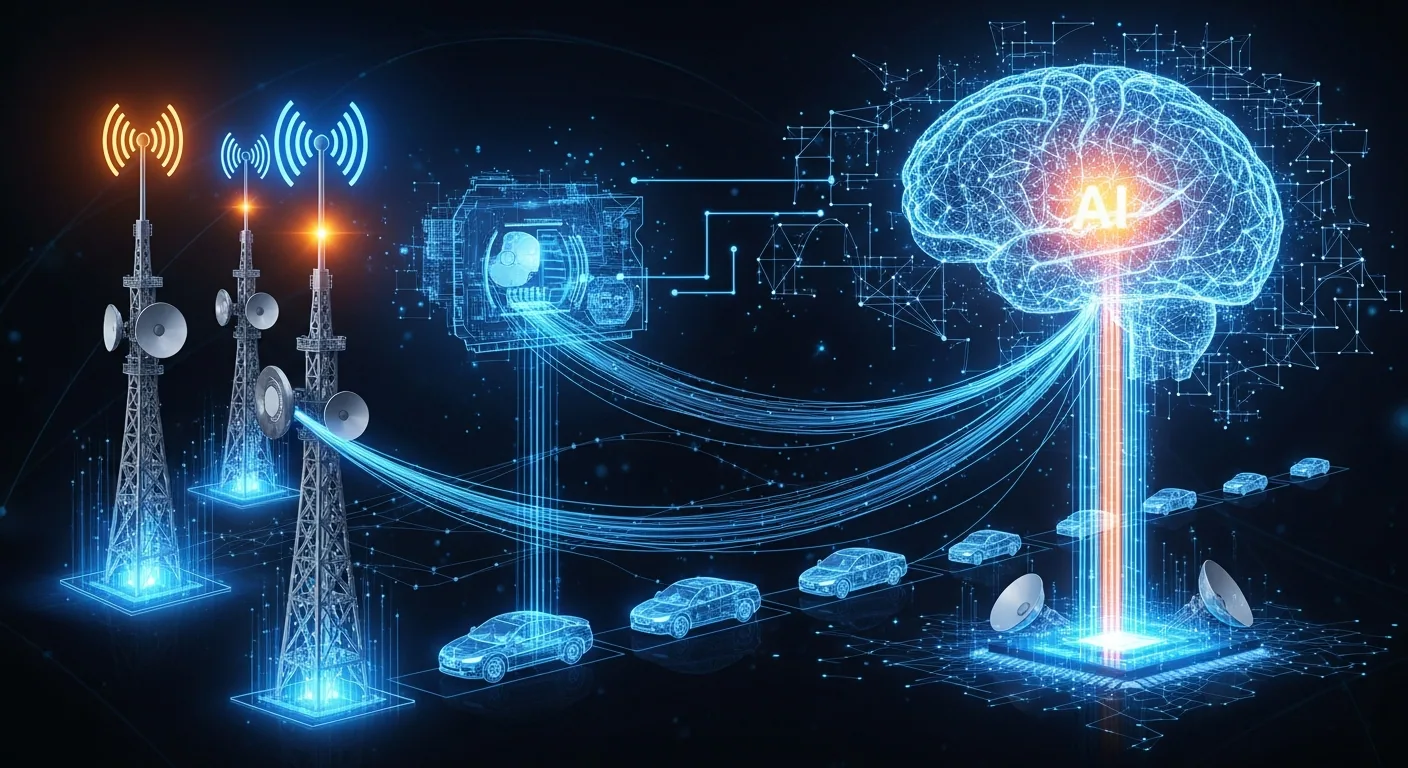
The Intelligence Gap: AI Promise vs. Data Reality
While major vendors promise a future of Level 4 and Level 5 autonomous operations – characterised by self-healing, intent-driven resource management, and real-time optimisation – there is a critical missing link. These sophisticated AI engines are currently starving for Physical Layer ground truth training and tuning data.
Legacy Tools Can't Scale
Traditional drive-test tools were designed for human-led, periodic sample testing – not for fuelling 24/7 AI engines. These "point-in-time" snapshots lack the spatial density, velocity, and temporal frequency that autonomous systems require for real-time decision-making.
Crowdsourced Data is Compromised
Plagued by device heterogeneity, sampling bias, uncontrolled measurement capabilities, coarse geo-location, privacy concerns, and user opt-outs, consumer-grade devices cannot capture the deep Layer 1 – Layer 3 measurement data required to train and tune high-precision AI models.
AI Needs Real-Time Data Velocity
AI-based management systems require continuous, near-zero latency measurement data streams for closed-loop automation. Legacy workflows that take weeks to generate insights are fundamentally incompatible with AI feedback loops.
Hyper-Granular Data is Non-Negotiable
Aggregated cell-level KPIs are far too coarse for the era of dense urban 5G and private networks. To optimise high-quality coverage and ultra-low latency use cases, AI models need comprehensive, band-specific measurement data accurate at every physical street address.
Traditional Tools Can't Feed AI Engines
Snapshots, Not Streams
Legacy tools produce periodic samples, not the continuous data streams that AI feedback loops require.
Coarse Aggregation
Cell-level KPIs hide the street-level granularity needed for precise AI model training and tuning.
Weeks-Long Processing
By the time legacy drive-test data is processed, network conditions have already changed.
Device Bias
Crowdsourced data from consumer devices lacks the engineering-grade precision AI models demand.
The Data Foundation for Autonomous Networks
Our continuous, hyper-scale, and engineering-grade data foundation empowers closed-loop AI platforms from vendors like Ericsson and Nokia. LURA provides petabyte-scale geospatial training data, while KALLO delivers real-time temporal feedback for closed-loop automation.
Massive-Scale Training Data for Digital Twins
LURA's saturation measurement data provides the geospatial foundation that AI models need to create 100% accurate RAN Digital Twins. Continuous, massive-scale mapping for high-fidelity model training.
- Hyper-Scale Training
Train AI models that optimise macro public, private 5G, and public safety P25 networks simultaneously.
- Digital Twin High-Fidelity
Generate 100% accurate RAN Digital Twins by ingesting extensive measurement data to mirror the physical environment.
- AI-Based Physical Tuning
Power algorithms for automated antenna pan, tilt, and azimuth control to eliminate coverage degradation.
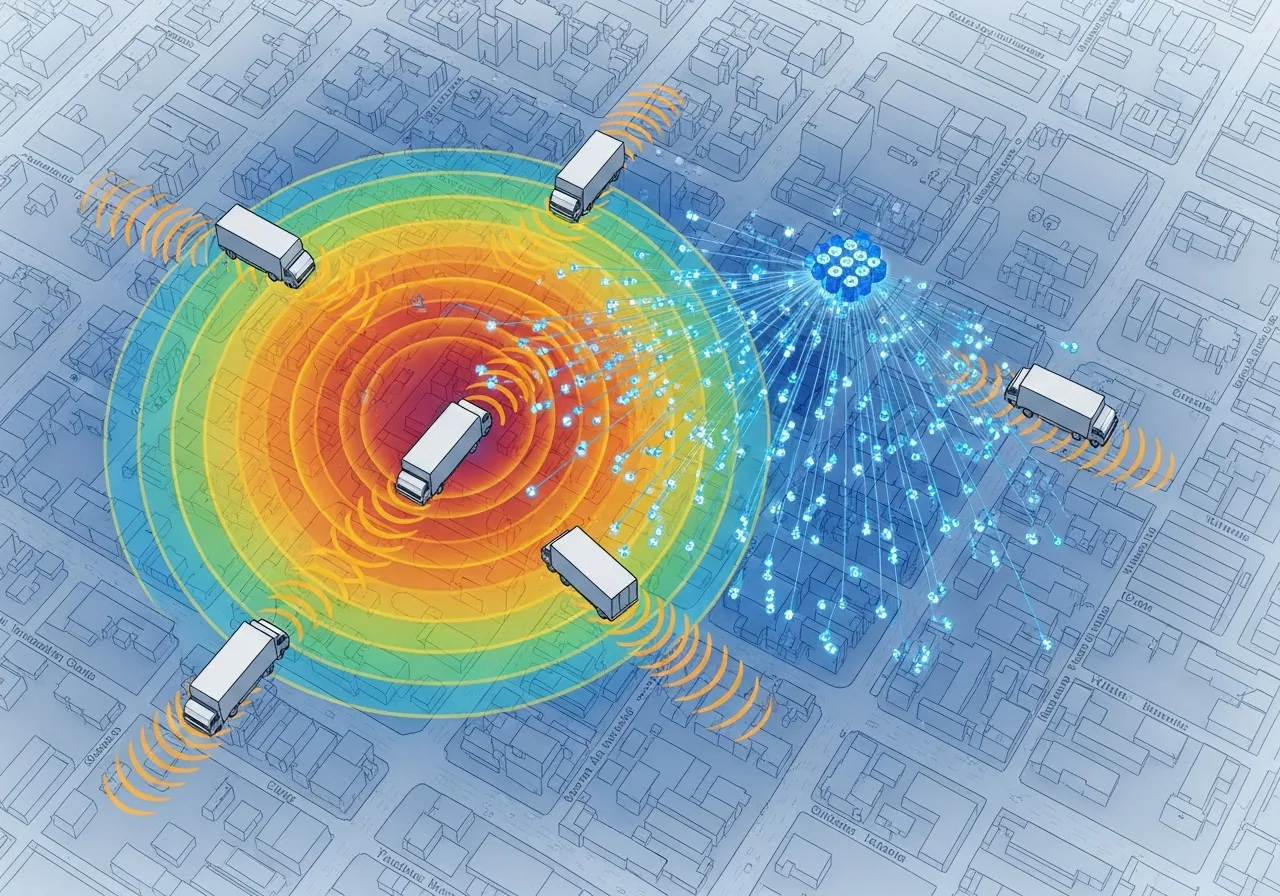
Real-Time Feedback for Closed-Loop Automation
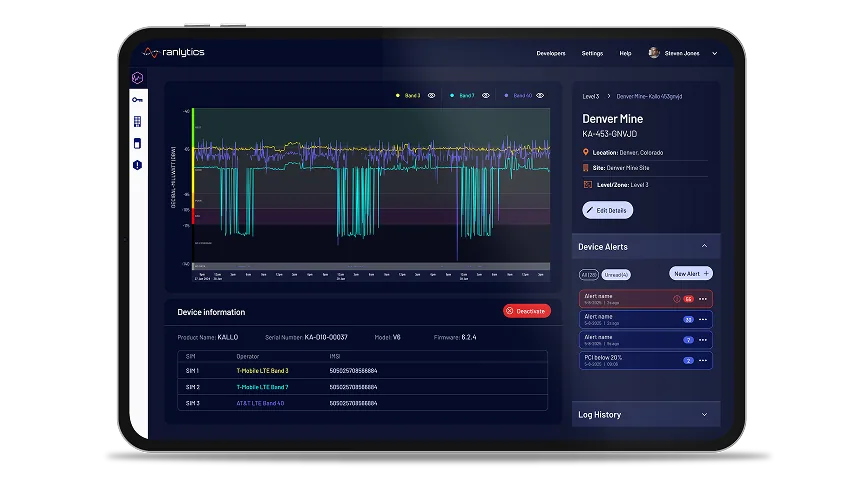
KALLO closes the loop: providing the continuous, real-time RF monitoring that AI systems need to move from "suggested actions" to fully autonomous execution.
- Engineering-Grade Telemetry
Feed foundational models with carrier-grade QMDL log file measurement data covering scores of Layer 1 to Layer 3 metrics.
- Proactive Resolution Loops
Real-time data feeds directly into automation tools to resolve interference or coverage issues before they impact service.
- Deterministic Objectivity
Training environment free from device heterogeneity, sampling bias, and opt-in driven insufficient sampling points.
Unified Data Platform for AI Integration
RAN-DPS converges all saturation measurement, in-building test, and monitoring data into a unified platform ready for AI/ML engine integration. The data foundation your autonomous network needs.
- Guaranteed Service Integrity
24/7 visibility into private 4G/5G, CBRS, and public safety networks, feeding AI tools the data for strict SLA guarantees.
- Spectral Efficiency Optimisation
Ensure every band performs optimally through AI-based management with real-world ground truth data.
- Energy Consumption Control
Support AI-driven control of power amplifiers on dynamic duty cycles to optimise power without compromising coverage.
Integrating Ground Truth into AI-RAN Architectures
Powering the Ericsson Intelligent Automation Platform (EIAP)
Ericsson's AI-RAN strategy relies on three tiers: AI for RAN (orchestration), AI in RAN (embedded L1-L3), and AI on RAN (edge workloads). Ranlytics serves as the external "Ground Truth" engine for the Non-Real Time RIC (Non-RT RIC).
rApp Training & Validation
Ericsson rApps, such as the AI-driven Cell Shaper or Performance Diagnostics, typically rely on internal network KPIs. By ingesting LURA's saturation measurement data, these rApps can now correlate internal metrics with external RF reality at sub-1m accuracy.
Closed-Loop Automation
KALLO's near-real time telemetry feeds into Ericsson's Service Management and Orchestration (SMO) layer via open interfaces. This allows the AI to immediately validate the real-world impact of automated antenna tilt, power, or base station configuration adjustments.
Ready to Enable True AI-Driven Network Automation?
Discover how Ranlytics provides the hyper-scale, high-fidelity data foundation that AI-based autonomous networks demand to move from theory to operational reality.
"Without high-resolution, engineering-grade data, AI-driven network management is just a sophisticated guess. Ranlytics provides the deterministic ground truth required for full autonomy."